
History
Almost 800 years of history: from Europe’s largest Medieval hospital to a cultural hotspot.

In the beginning, it was a hospital
The history of the Bijlokesite began in the early 13th century, when a small-scale hospital in the centre of Ghent wasn’t large enough to take care of the sick and also had to make way when the Dominicans demanded space for a new monastery. Around 1228, construction began on a new hospital on the ‘Bijlokemeersen’, a private or ‘enclosed’ area (the meaning of the word ‘beloken’). It was one of the largest institutions of its kind in Western Europe and marked the beginning of healthcare at De Bijloke in the medieval period.
The abbey
The sisters of a Cistercian abbey nearby were entrusted with looking after the sick. As a result, it was decided to establish a new Cistercian abbey at the Bijlokesite. Over time, it expanded with the addition of various rooms and buildings.
The French Revolution
The French Revolution at the end of the 18th century turned De Bijloke hospital into a civilian hospital. The law on the abolition of the monasteries ensured that after more than 500 years, the administration of the hospital was no longer in the hands of the Cistercians. The sisters continued to work there.
Founding of Ghent University
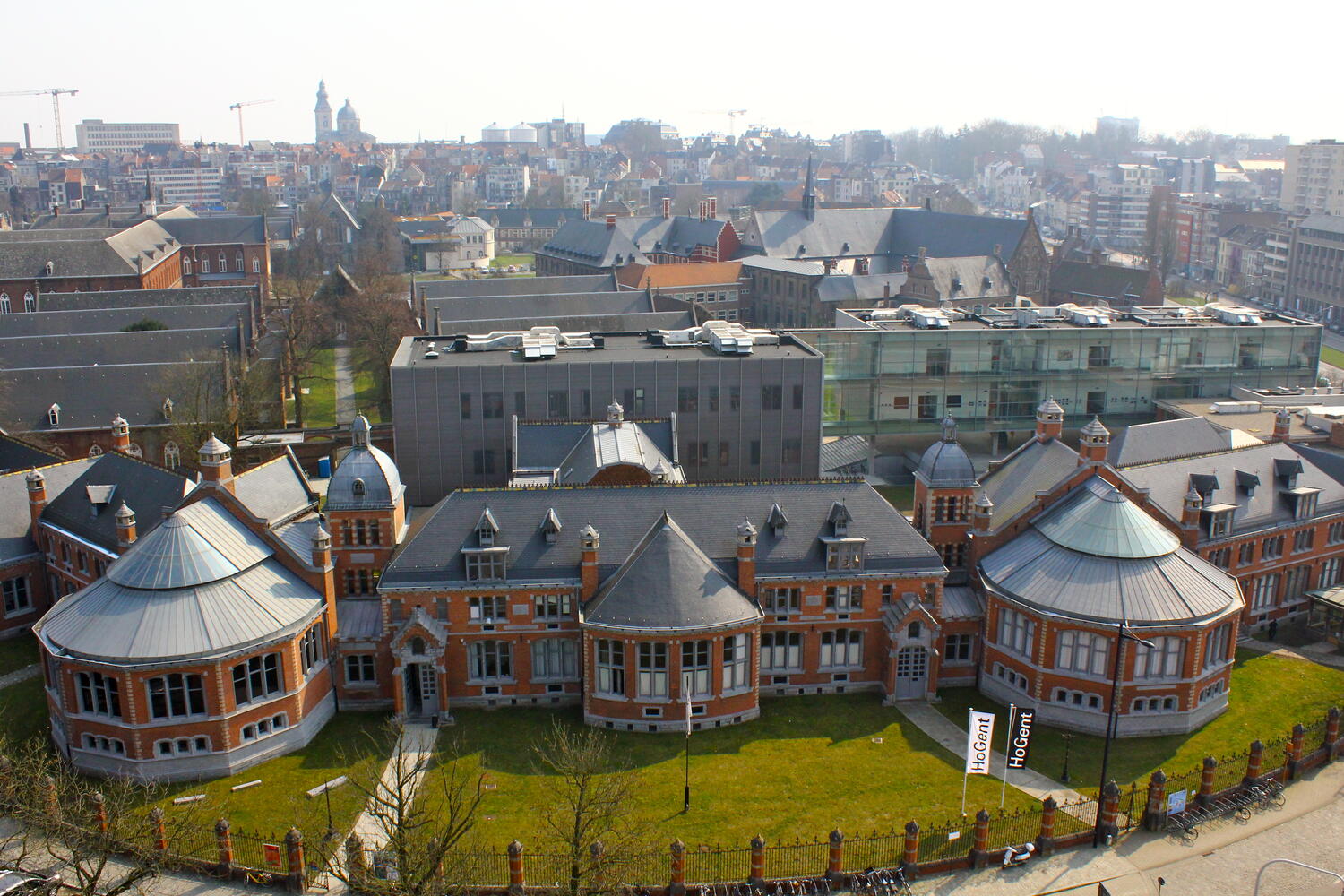
With the founding of Ghent University in 1817, the training of doctors and other medical staff was entrusted to De Bijloke Hospital. At the end of the 19th century, a new anatomical institute with an Anatomical Theatre, a surgery room, laboratories, classrooms, a museum of anatomy and a cutting room was built next to the infirmary. The museum featured dried-out skulls, human bones or muscles and organs preserved in formaldehyde. Later it became a study room and even a linen room. Students were taught here until 1965.
A new civil hospice
In the course of the 19th century, the hospital became way too small. The industrial city of Ghent experienced unprecedented population growth, which led to the outbreak of three epidemics. Prominent physicians made a case for the construction of a new hospital. Between 1863 and 1880, the Bijloke complex was significantly expanded. The old medieval chapel became a morgue with an accompanying section room.
From medieval hospital & abbey to cultural hotspot
In the second half of the 20th century, the health and care sector were fully professionalized, with the result that the old buildings were no longer fit for purpose. The university built its own hospital and housed its medical training department there. The remaining medical and care functions were moved to a new hospital. Since then the Bijlokesite transformed into a cultural hub with a unique blend of heritage, arts, and education. In this green oasis, the heritage and gardens connect the twenty cultural organizations that are currently based at the Bijlokesite.